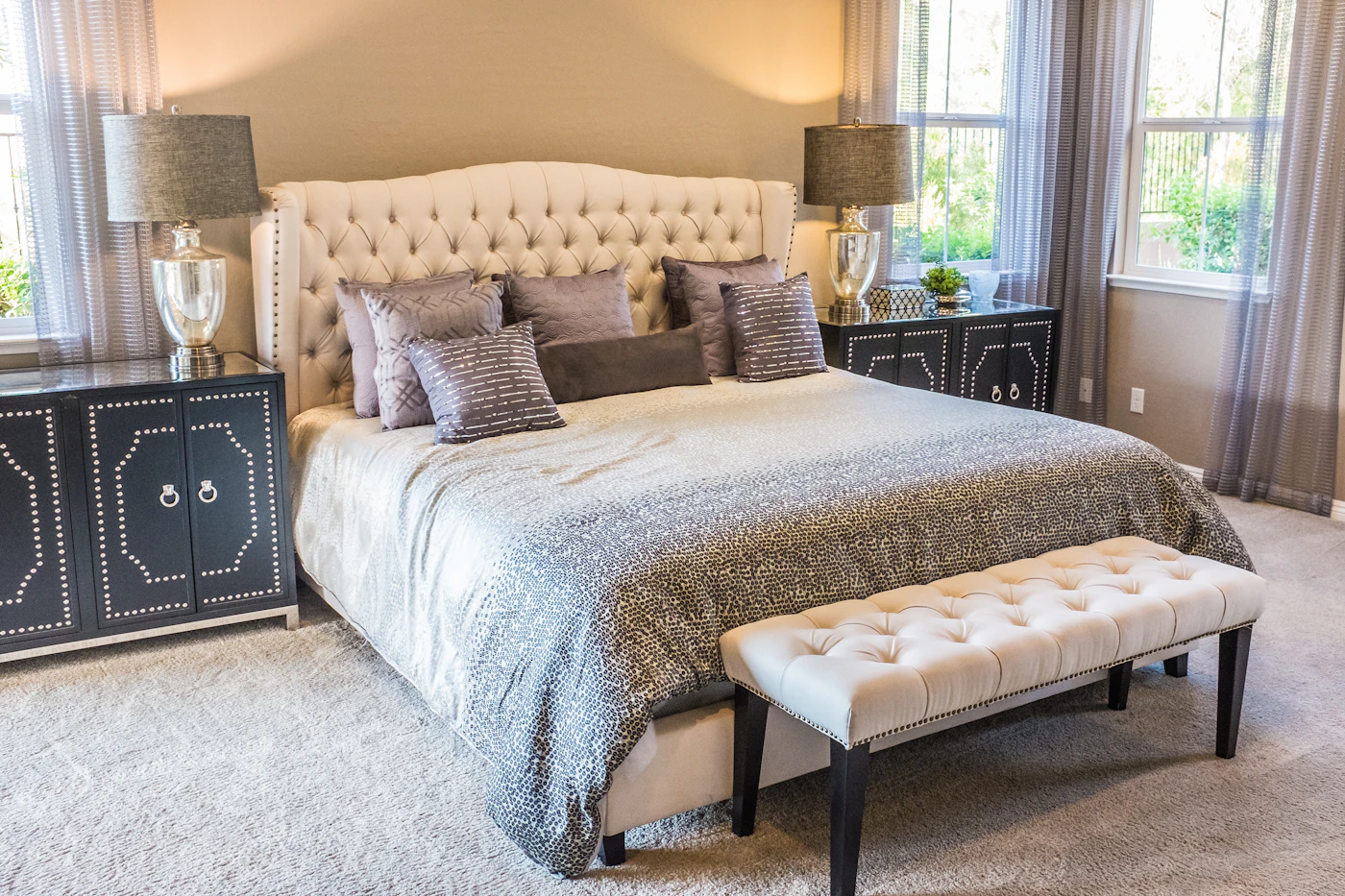
1. Color Drenching
Color drenching, saturating walls, trim, ceilings, and even furniture in a single, immersive hue, remains one of the boldest interior design trends carrying into 2026. Instead of a single accent wall, the entire room becomes a cohesive color statement, creating depth and a sense of enveloping calm.
2. Earthy, Moody Color Palettes
Cool grays and stark white walls are giving way to rich, grounded colors. Deep browns, burgundy, dark green, and sage continue to lead 2026 palettes, reflecting a broader shift toward warmth and expressiveness in home design.
3. Modern Heritage Style
Modern heritage blends classic architectural details such as crown molding, traditional millwork, and historical silhouettes with contemporary furniture and finishes. It is a trend built on bridging past and present in a way that feels meaningful rather than nostalgic for nostalgia's sake.
4. Natural Wood and Tactile Materials
Materiality is back at the center of interior design in 2026. Natural wood is starring in furniture and architectural details, prized for the warmth and authenticity it brings to a space. Richly grained wood pairs especially well with unlacquered brass, bronze, and copper that develop character over time.
5. Sculptural, Organic Shapes
Irregularity is one of the defining keywords of 2026 interior design. Furniture is trading rigid lines for continuous, organic curves such as arced sofa frames, sweeping consoles, and asymmetrical silhouettes.
6. Biophilic, Nature-Connected Design
Sustainability and a real connection to nature are central to 2026 interior design trends. This goes beyond a few houseplants. It includes choosing natural, responsibly sourced materials and layouts that maximize daylight and airflow, creating homes that feel restorative rather than purely decorative.
7. Thoughtful Maximalism
After years of minimalist restraint, 2026 embraces thoughtful maximalism, layered textures, collected objects, and personal artifacts displayed with intention rather than clutter. It is maximalism with editing, where every piece earns its place.
8. Vintage and Antique Integration
Vintage pieces, heirlooms, and mid-century furniture are seeing a significant resurgence in 2026 as homeowners look for decor that carries personal history and story instead of mass-produced uniformity.
9. Slow Living, Comfort-Led Spaces
Interiors in 2026 are shifting toward spaces that support rest and restoration rather than performance for an audience. This slow-living trend prioritizes ergonomics, softness, and comfort through deep-seated sofas, layered textiles, and rooms designed around how people actually use them.
10. Tech Meets Tactility
Smart home technology is becoming less visible and more integrated into 2026 interiors. Lighting systems, climate control, and entertainment tech are being built into cabinetry and architectural details so tactile materials remain the visual focus while smart systems quietly do the work.
Final Thoughts
The common thread across every 2026 interior design trend is intentionality. Rather than chasing fleeting fads, this year's most compelling homes are built around materials, colors, and shapes that feel personal, comfortable, and built to last. Whether you adopt just one of these trends or weave several together, the goal is the same: a home that feels authentically yours.
Frequently Asked Questions
What is the biggest interior design trend for 2026?
Color drenching and earthy, moody palettes, including chocolate brown, burgundy, and sage, are among the most widely adopted trends for 2026, reflecting a broader shift away from cool, neutral minimalism.
Is minimalism still in style in 2026?
Stark minimalism has given way to a warmer, more layered aesthetic. Simplicity still matters, but 2026 interiors favor tactile materials, curated collections, and comfort over sparse, cold spaces.
What colors are trending in interior design in 2026?
Deep, earthy hues such as chocolate brown, burgundy, olive, sage, and espresso are leading 2026 color palettes, alongside softer accents like butter yellow and powder pink.
How can I update my home for 2026 on a budget?
Start small by introducing a deep, earthy accent color, swapping in a few vintage or natural-wood pieces, and layering in tactile textiles like linen and wool. These changes reflect the year's biggest trends without requiring a full renovation.